
 Save to Pinterest
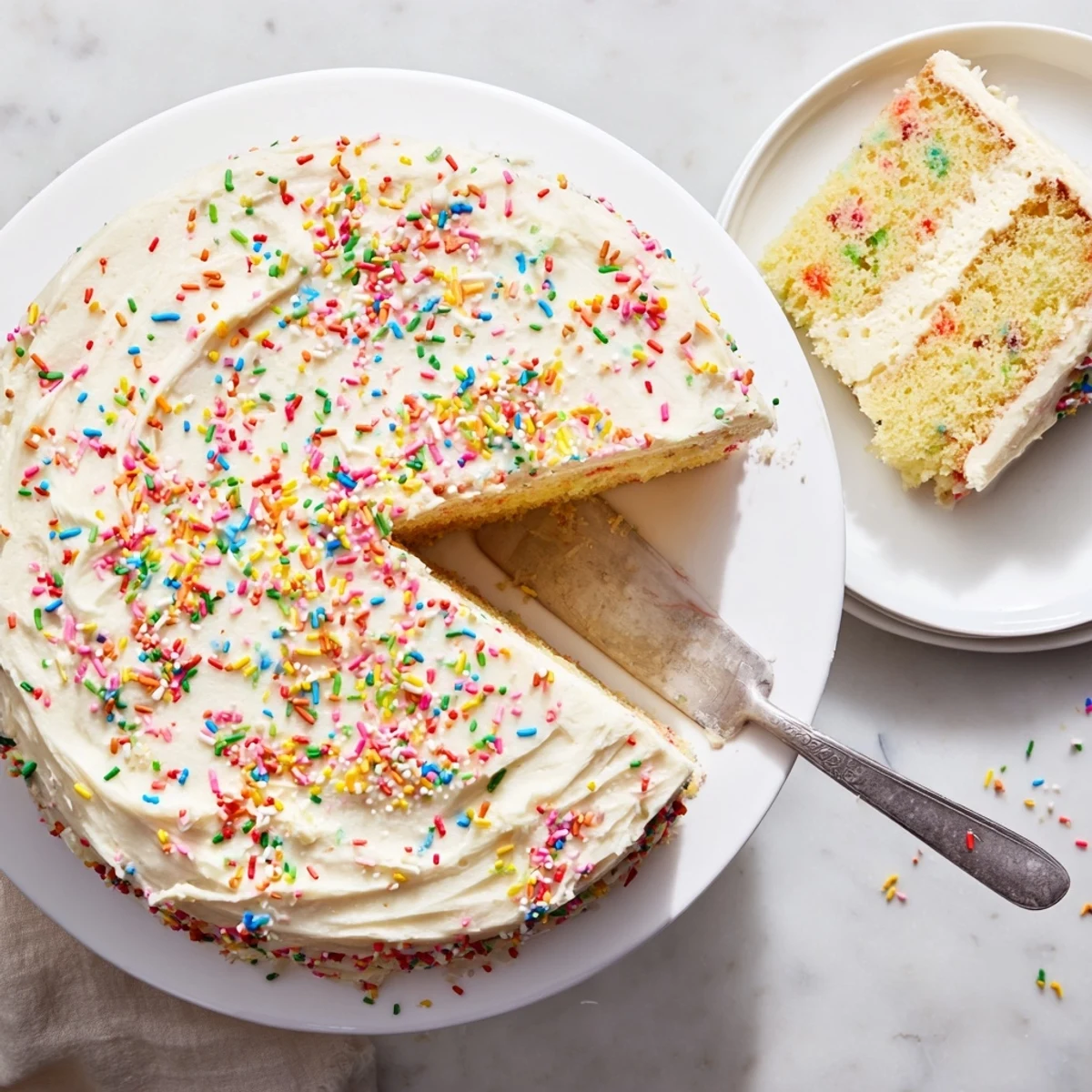
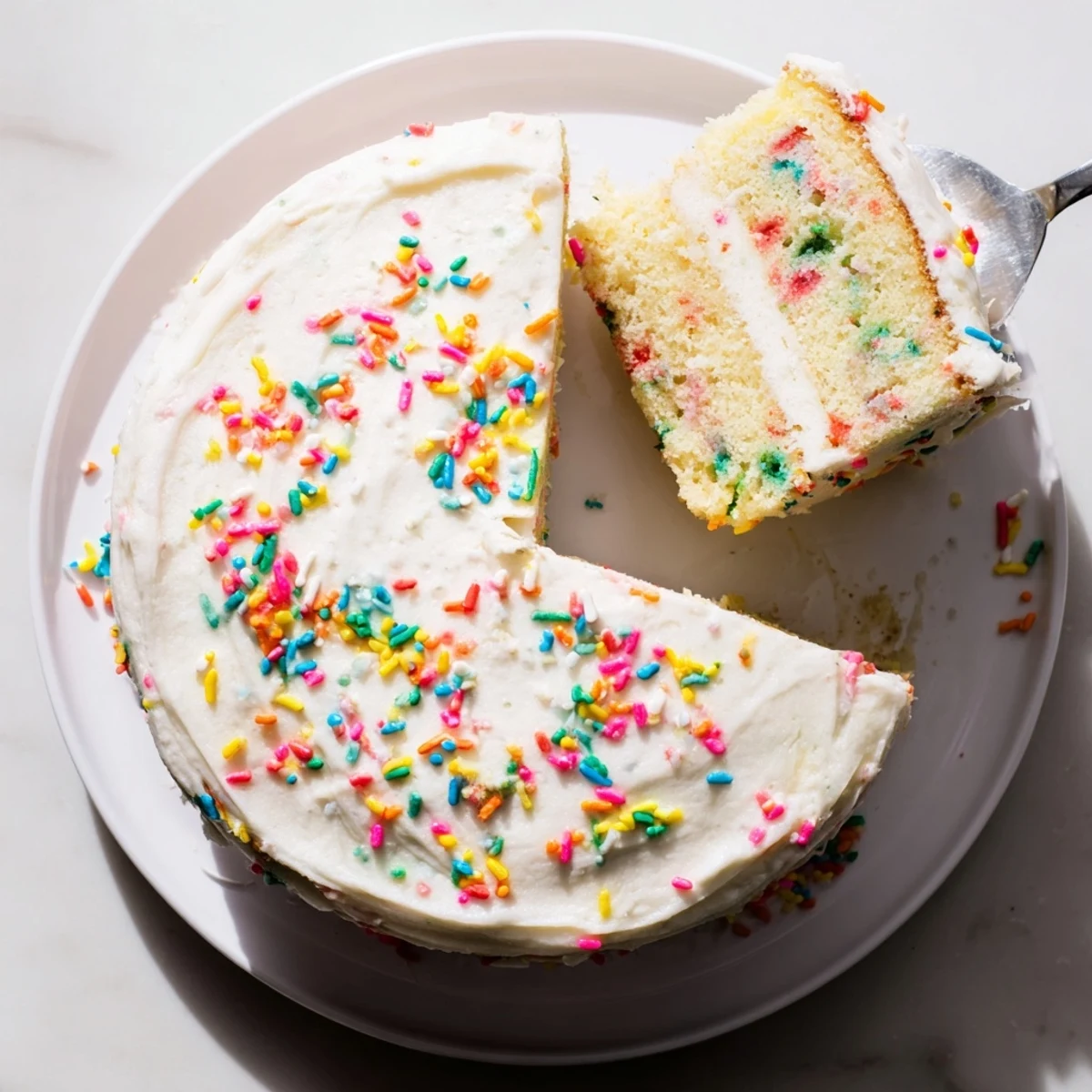
 This delightful vanilla cake brings birthday celebration vibes to everyone, regardless of dietary restrictions. The tender crumb comes from a careful blend of gluten-free flour combined with butter and oil for optimal moisture. Rainbow sprinkles folded into the batter create those signature funfetti moments throughout each slice. A rich vanilla buttercream frosting crowns the two-layer cake, while additional sprinkles on top add the finishing festive touch. The entire process takes just under an hour from start to finish, yielding twelve generous servings perfect for parties.
The year my niece turned seven, she announced at dinner that regular birthday cake just wasn't special enough anymore. She wanted something that felt like a party inside every bite, with actual colors hidden right in the cake itself. I spent three weekends testing different gluten-free flour combinations, watching batch after batch come out either too dense or too dry. That Tuesday night when I finally cut into a slice and saw those perfect specks of rainbow tucked inside tender yellow crumb, I actually did a little kitchen victory dance.
Last summer I made this for my friend Emma's thirtieth birthday, the first time she'd had a real birthday cake since going gluten-free five years ago. She took one bite and got quiet, then looked at me with these huge eyes and whispered that she'd forgotten what proper birthday cake tasted like. Now every time she sees sprinkles at the grocery store, she sends me a photo.
Ingredients
- Gluten-free all-purpose flour blend: Xanthan gum is already included, which saves you a step and provides structure
- Baking powder and baking soda: This combination gives the lift needed for light, tender layers
- Unsalted butter: Softened to room temperature creates the proper aeration when creamed with sugar
- Vegetable oil: Keeps the cake moist for days and creates a tender crumb
- Rainbow sprinkles: Must be labeled gluten-free, and avoid nonpareils which can bleed into the batter
- Powdered sugar: Sifting first prevents lumps in your frosting
Instructions
- Getting Ready:
- Preheat your oven to 350°F (175°C) and prepare two 8-inch round pans by greasing them thoroughly and lining with parchment paper circles.
- Whisking the Dry Mix:
- In a medium bowl, combine the gluten-free flour blend, baking powder, baking soda, and salt until everything is evenly distributed.
- Creaming the Base:
- Beat the sugar, softened butter, and oil together for 2 to 3 minutes until the mixture looks pale and fluffy.
- Adding Eggs and Vanilla:
- Add the eggs one at a time, letting each incorporate fully before adding the next, then mix in the vanilla extract.
- Combining Everything:
- Alternate adding the flour mixture and milk to your wet ingredients, starting and ending with the dry ingredients.
- Folding in the Magic:
- Gently fold in the rainbow sprinkles by hand using a spatula, being careful not to overmix the batter.
- Baking the Layers:
- Divide the batter evenly between your prepared pans, smooth the tops, and bake for 28 to 32 minutes.
- Making the Frosting:
- Beat the softened butter until creamy, then gradually add sifted powdered sugar, vanilla, salt, and milk until smooth.
- Assembling and Decorating:
- Frost between the layers and over the top and sides, then finish with extra sprinkles pressed gently into the frosting.
 Save to Pinterest
 My dad, who's been skeptical of gluten-free baking for years, took a slice home after trying this at my sister's party. The next morning he texted me asking for the recipe, which might be the highest compliment he's ever given my cooking.
Making It Dairy-Free
Swapping in plant-based butter and milk works beautifully here, but I've learned that not all dairy-free brands cream the same way. Some margarine-style spreads contain too much water and won't give you that proper fluffy texture when beaten with sugar. Look for brands specifically designed for baking that have a higher fat content.
Getting Even Cake Layers
I used to eyeball the batter division between pans until I started weighing the filled pans on my kitchen scale. Now I know that aiming for exactly the same weight in each pan means both layers finish baking at the same time, with the same rise and texture. Small adjustments make such a difference in the final presentation.
Storage and Make-Ahead Tips
This cake actually tastes better on day two, once the flavors have had time to settle and the frosting has slightly softened the crumb. You can bake and wrap the layers tightly in plastic wrap up to two days ahead, keeping them at room temperature. Frost the day you plan to serve.
- The frosted cake stays fresh at room temperature for two days, covered with a cake dome
- For longer storage, refrigerate individual slices in airtight containers
- Unfrosted layers freeze beautifully for up to three months
 Save to Pinterest
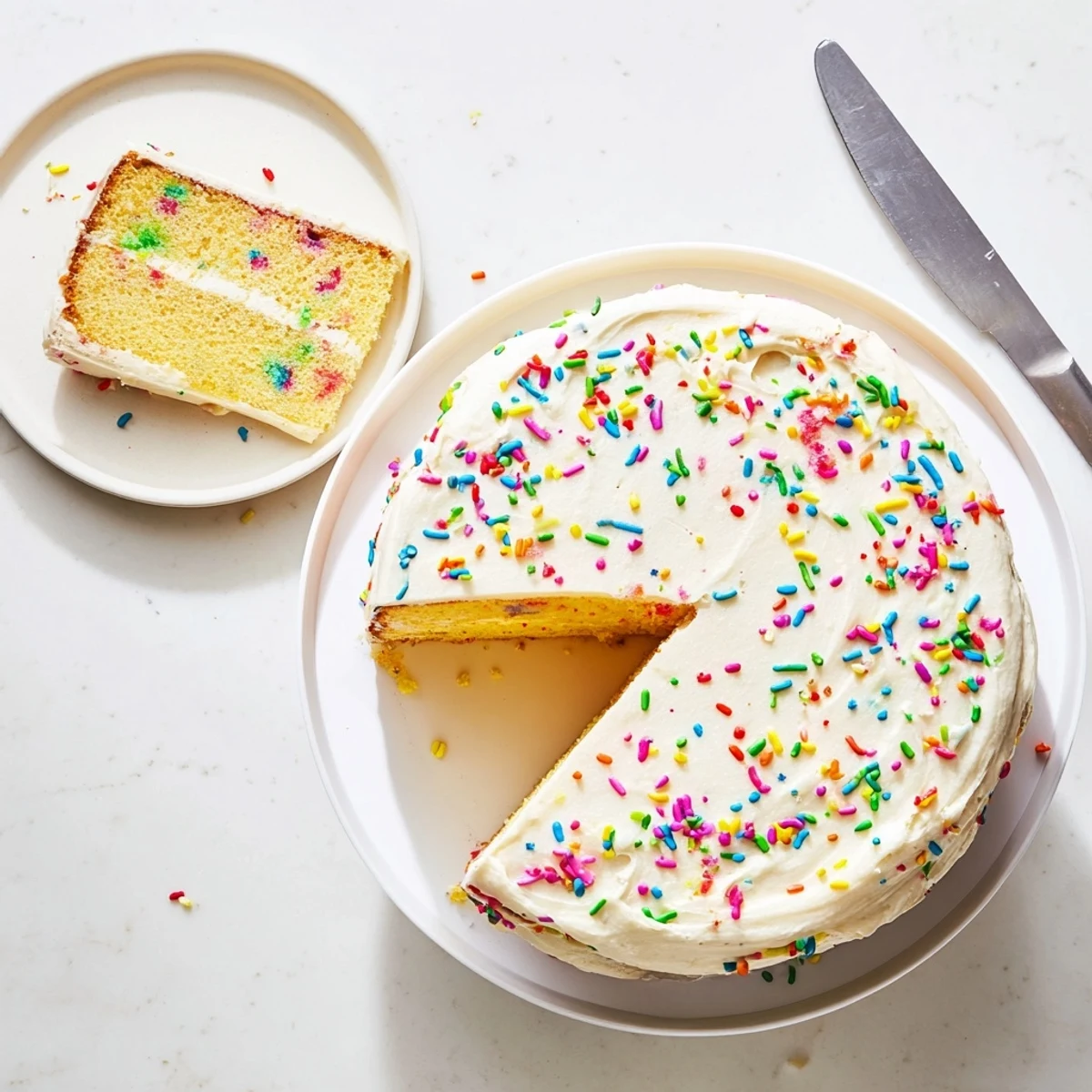
 There's something about watching someone's face light up when they cut into this cake and see those colorful specks waiting inside. Every birthday deserves that moment of surprise.
Questions & Answers
- → Can I make this dairy-free?
-
Yes, substitute plant-based butter for both the cake and frosting, and use dairy-free milk in place of whole milk. The texture remains excellent with these swaps.
- → Why avoid nonpareil sprinkles?
-
Nonpareils tend to bleed their color into the batter during baking, creating gray streaks. Look for rainbow jimmies or quins labeled gluten-free for vibrant results.
- → How should I store leftovers?
-
Keep the cake covered at room temperature for up to two days. For longer storage, refrigerate for up to five days. Bring to room temperature before serving for best texture.
- → Can I freeze the unfrosted layers?
-
Absolutely! Wrap cooled layers tightly in plastic and freeze for up to three months. Thaw overnight at room temperature before frosting and decorating.
- → What gluten-free flour works best?
-
Choose a blend containing xanthan gum for proper structure. Cup-for-cup blends designed for baking typically yield the most reliable results in this vanilla cake.
- → Why use both butter and oil?
-
Butter provides rich flavor while oil ensures moisture and tenderness. This combination prevents the dryness often associated with gluten-free baked goods.