 Save to Pinterest
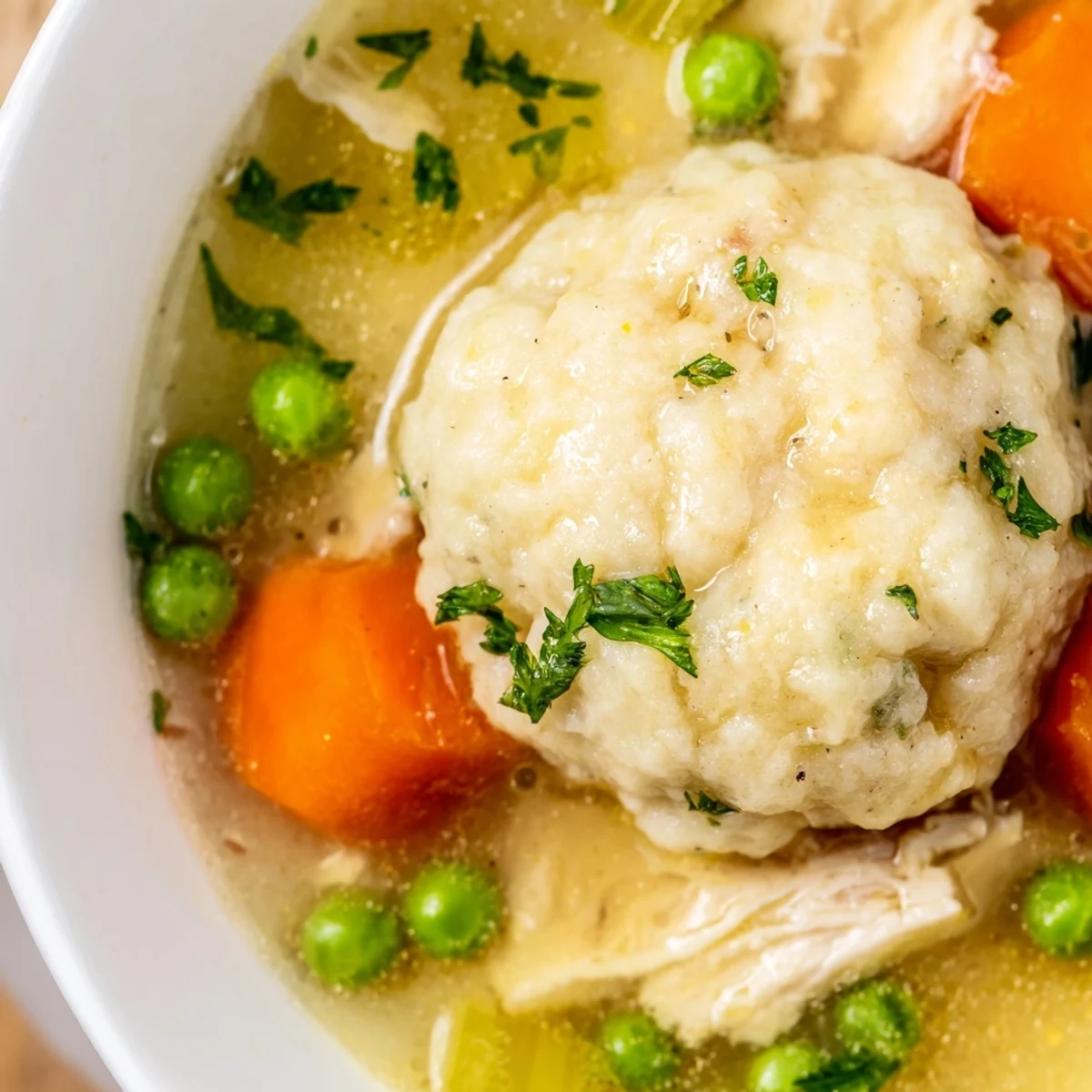
 This comforting bowl features bone-in chicken thighs simmered with carrots, celery, and onions in a savory broth. The crowning glory is fluffy, pillowy dumplings steamed right on top. Finished with frozen peas and fresh parsley, it’s a hearty, warming meal that requires just over an hour to prepare and yields six generous servings.
My mother kept a worn notebook filled with soup recipes, but the one she returned to most was this chicken soup with dumplings. Years later, when I finally asked why, she said it wasn't about the recipe—it was about watching people's faces the moment they bit into those pillowy dumplings floating in steaming broth. I understood the moment I made it myself.
I made this soup on a Tuesday evening when a friend called saying she wasn't feeling well. By the time she arrived, the kitchen smelled like a warm hug—thyme and butter and something that made the whole apartment feel safe. She sat at my counter, bowl in both hands, and didn't say much. Sometimes that's when you know food is doing its job.
Ingredients
- Unsalted butter and olive oil: The combination creates a golden base that's richer than oil alone but not greasy—this is where the soup's foundation begins.
- Onion, carrots, and celery: These three are the backbone of nearly every great soup, and here they soften into sweet, tender pieces you'll want to eat.
- Garlic, thyme, and bay leaf: Fresh garlic mingles with dried thyme and bay to build a fragrance that fills your kitchen before you've even added the broth.
- Bone-in, skinless chicken thighs: Thighs stay juicy where breast meat would dry out, and the bones give the broth body and depth without added effort.
- Low-sodium chicken broth: This is your liquid gold—use good broth because it's the canvas everything else sits on.
- Frozen peas and fresh parsley: Peas add sweetness and color at the very end, while parsley brings freshness that keeps the soup from feeling heavy.
- All-purpose flour, baking powder, and baking soda: This trio creates the chemical lift that makes dumplings puff and float instead of sink.
- Cold butter and whole milk: Cold butter creates pockets of steam that help dumplings stay tender, and milk keeps them moist and rich.
- Egg: This binds the dumpling dough just enough to hold together without making it tough.
Instructions
- Build the flavor base:
- Heat butter and olive oil together in your soup pot over medium heat. This partnership of fat makes everything soften beautifully. Add your diced onion, carrots, and celery, and let them get golden and tender for about five minutes—you want to hear them sizzle slightly.
- Wake up the aromatics:
- Stir in your garlic, thyme, and bay leaf, cooking for just a minute until the kitchen fills with that unmistakable herbal perfume. This brief pause matters—it blooms the flavor.
- Simmer the chicken:
- Nestle your chicken thighs into the pot and pour in all that broth. Season with salt and pepper, bring everything to a boil, then drop the heat low, cover, and let it simmer gently for thirty minutes. The chicken will become so tender it falls apart at the slightest touch.
- Shred and return:
- Pull the chicken out onto a plate and let it cool just enough to handle. Discard the bay leaf and the bones, then use two forks to shred the meat into bite-sized pieces. Return it to the pot where it belongs.
- Finish the soup:
- Stir in your frozen peas and fresh parsley. Keep the soup at a gentle simmer—not a rolling boil—because this is where your dumplings will float.
- Mix the dumpling dough:
- In a separate bowl, whisk together your flour, baking powder, baking soda, and salt. Cut in the cold butter until everything looks like coarse breadcrumbs—you want little butter pieces throughout, not a smooth paste. In another bowl, whisk milk, egg, and parsley together, then gently fold the wet ingredients into the dry. Stop as soon as everything comes together; overmixing makes tough dumplings.
- Drop and cover:
- Using a spoon or small ice cream scoop, drop tablespoon-sized pieces of dough directly onto your simmering soup—you'll make about twelve. Cover the pot and don't peek for fifteen minutes. The steam does all the work, puffing them into clouds.
- Taste and serve:
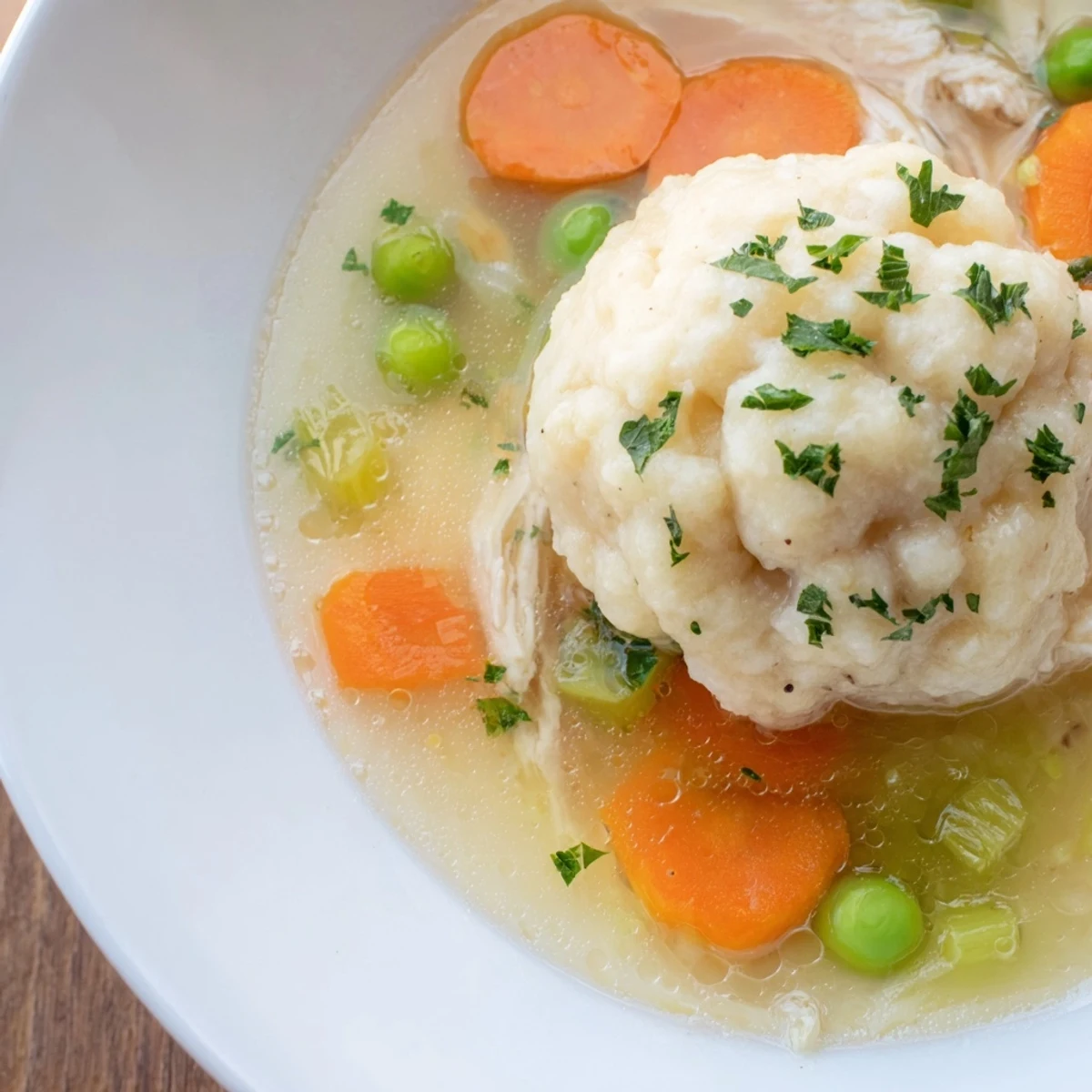
- After fifteen minutes, lift the lid carefully and look for dumplings that have risen and firmed. Taste, adjust salt and pepper if needed, and ladle into bowls with extra parsley scattered on top.
 Save to Pinterest
 There's a moment when everyone falls quiet eating this soup, forks moving slower, eyes half-closed. That's when you know you've made something that hits differently than just filling a stomach.
The Secret of Dumpling Texture
The difference between light, pillowy dumplings and heavy, leaden ones comes down to respecting your dough. I used to think more mixing meant better dumplings—tighter, sturdier. I was wrong. The moment all the dry ingredients are wet, you stop. Those streaks of flour that look undone are actually going to be the pockets that fill with steam and make them tender.
Why Bone-In Chicken Wins
Chicken breast is leaner and faster, I get it. But thighs have a richness and a structure that survives thirty minutes of simmering without turning into shreds too early. They also give the broth a silky quality that you can't replicate with just chicken and stock. After I stopped trying to save calories and started trying to create flavor, this soup became something people asked for by name.
Making It Your Own
This soup is forgiving, which is one reason it's been made for generations. Some people swear by a squeeze of lemon juice stirred in at the very end. Others add a splash of white wine to the broth or a pinch of nutmeg to the dumpling dough. The core stays the same, but your additions become the story of how you made it.
- A squeeze of fresh lemon juice added at the end brightens everything without making it taste citrusy.
- If you're serving gluten-free guests, swap in a 1:1 gluten-free flour blend and double-check your baking powder label.
- Leftover soup keeps for three days refrigerated, and the dumplings stay tender even after reheating gently on the stove.
 Save to Pinterest
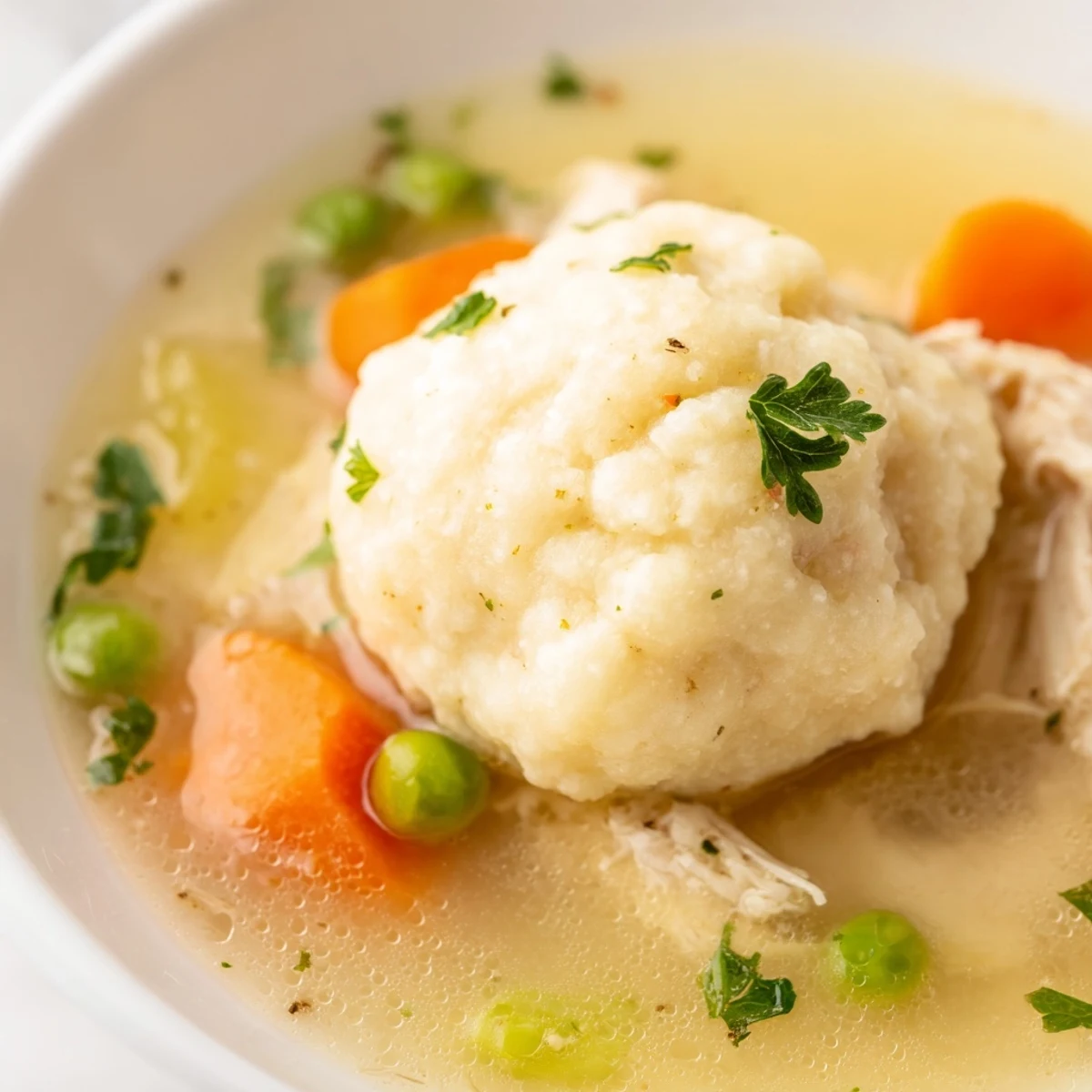
 This soup has fed my friends on hard days, warmed my family on cold nights, and somehow always tastes like coming home. That's the real recipe.
Questions & Answers
- → What makes the dumplings fluffy?
-
Using a combination of baking powder and baking soda along with cold butter cut into the flour creates a light, airy texture.
- → Can I use chicken breast instead?
-
Yes, you can substitute boneless, skinless chicken breasts, though thighs provide more moisture and flavor during the simmering process.
- → How do I prevent dumplings from getting dense?
-
Avoid overmixing the dough and ensure you do not lift the lid while the dumplings are steaming, as this keeps the heat consistent.
- → What vegetables are in the soup base?
-
The base includes a classic mirepoix of diced onions, sliced carrots, and celery stalks, enhanced with minced garlic and peas.
- → Is this dish freezer friendly?
-
The soup base freezes well, but it is best to add freshly made dumplings when reheating to maintain their fluffy texture.
- → How long does the soup take to cook?
-
Total time is about 1 hour and 10 minutes, including 25 minutes for preparation and 45 minutes for active cooking and simmering.