
 Save to Pinterest
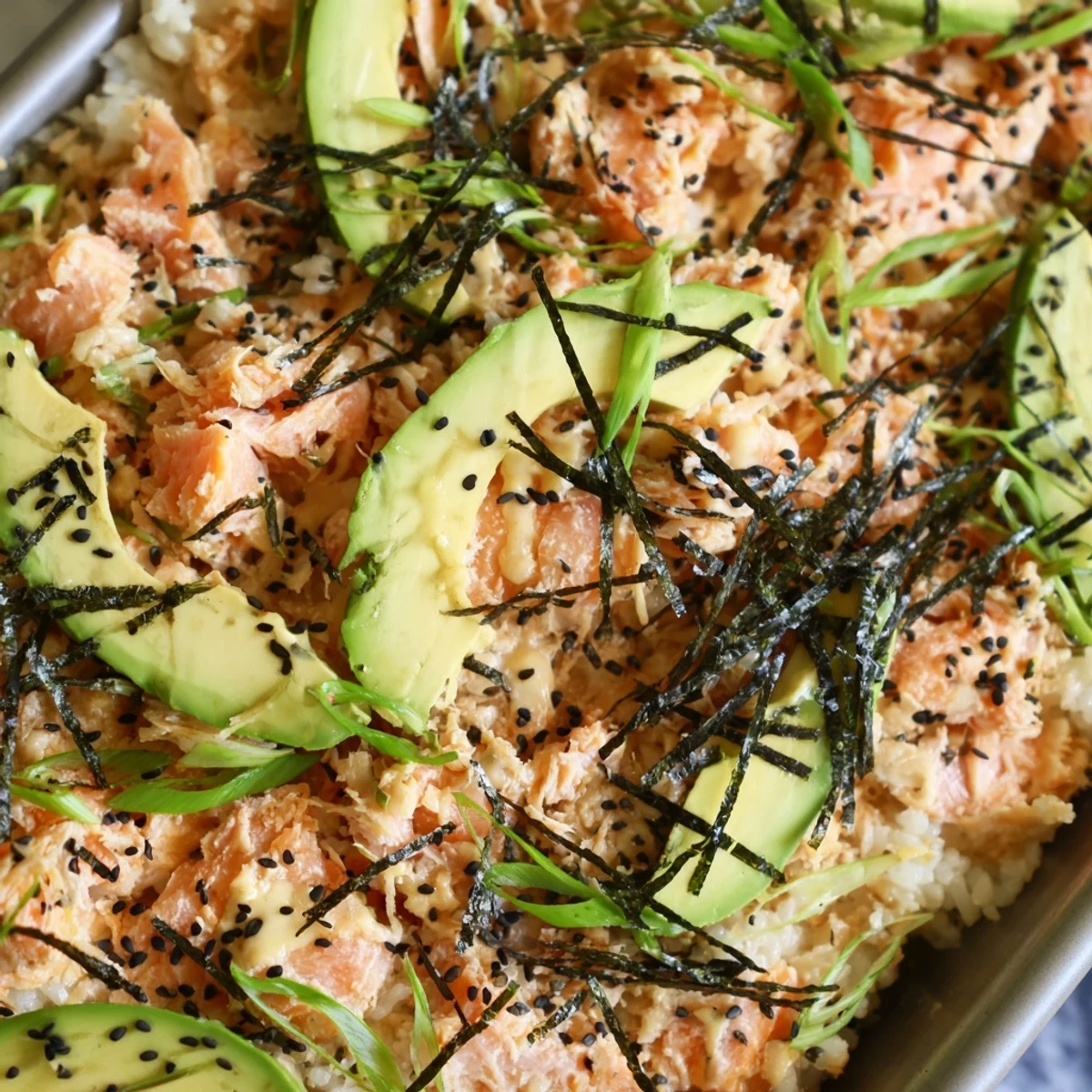
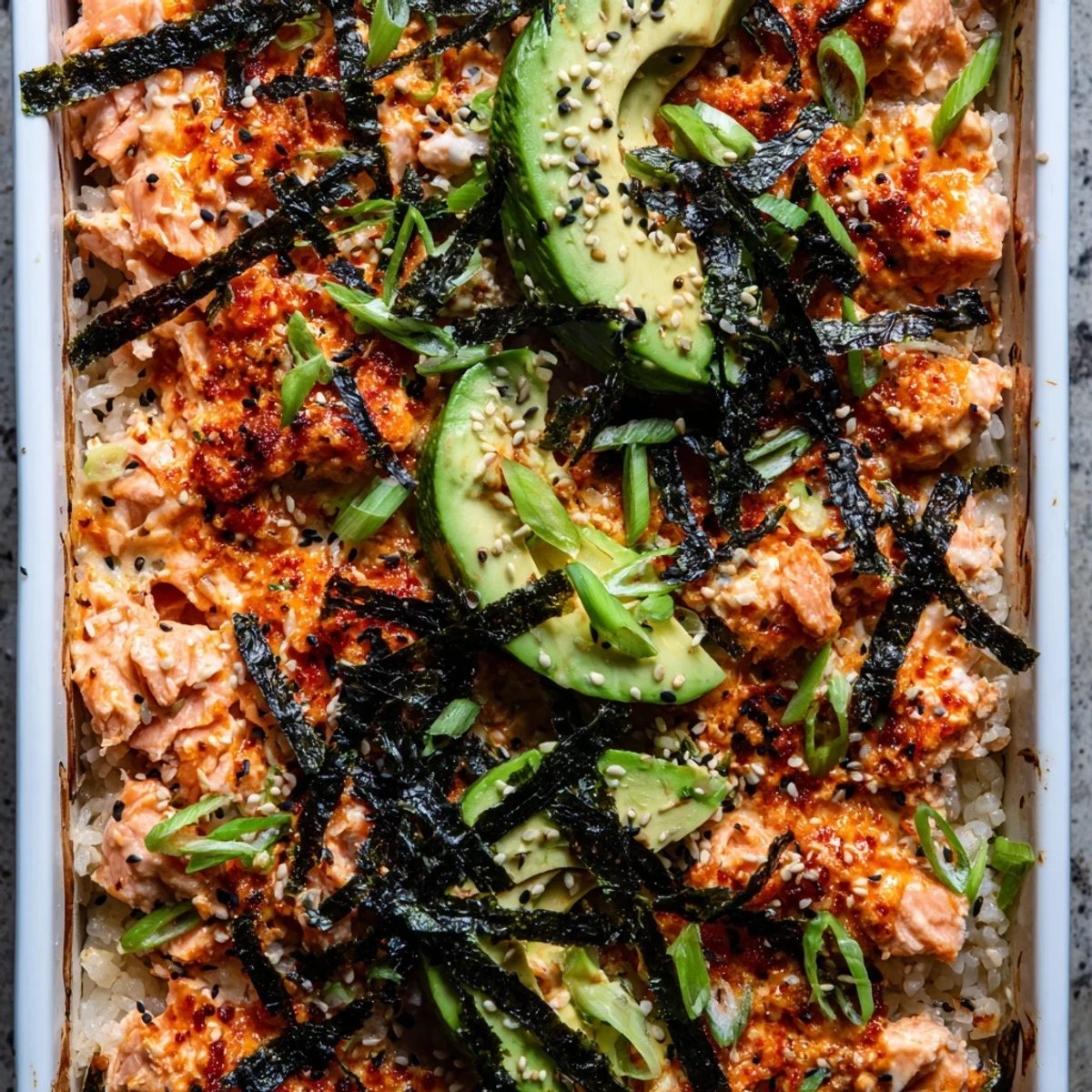
 This warm casserole transforms classic sushi flavors into an easy, shareable format. Seasoned rice forms a base for tender, flaked salmon mixed with creamy Sriracha mayo. The dish bakes until golden and bubbly, then gets topped with crisp nori strips, fresh avocado, green onions, and sesame seeds. Serve family-style in the center of the table, letting everyone scoop their own portions. The combination of warm, savory salmon with cool, fresh toppings creates perfect contrast in every bite.
The first time my sister brought this to a potluck, I was skeptical—baked sushi sounded like a crime against cuisine itself. But one spoonful of that warm, creamy salmon over perfectly seasoned rice changed my entire perspective. Now it's the most requested dish at every family gathering, and I've learned to make triple batches just to ensure there's leftovers.
Last winter, when my kitchen felt too cold for intricate knife work, this recipe became my weeknight salvation. My kids now argue over who gets the corner pieces with extra crispy edges, and watching them eagerly devour salmon and avocado still feels like a small victory.
Ingredients
- Sushi rice: Short-grain rice creates that essential sticky texture—long grain simply wont hold the layers together properly
- Rice vinegar mixture: This seasoning is what transforms plain cooked rice into authentic sushi rice foundation
- Salmon fillet: Skinless saves you from tedious prep work, and the natural oils keep the fish moist during baking
- Soy sauce and lemon juice: This duo creates a quick marinade that brightens the rich salmon
- Japanese mayonnaise: Kewpie mayo has a richer egg flavor that American brands cant match, though any mayo works in a pinch
- Sriracha: Adjust this based on your spice tolerance—start with less and add more after tasting
- Cream cheese: The secret ingredient that makes the salmon mixture incredibly luxurious
- Furikake seasoning: This rice seasoning blend adds essential umami and crunch
- Fresh toppings: Nori strips and green onions add that traditional sushi finish while avocado brings cool contrast
Instructions
- Prepare the rice foundation:
- Rinse the sushi rice until the water runs clear—this removes excess starch for perfectly separate grains. Cook with water and immediately fold in the warm vinegar mixture while the rice is still hot. Spread into your baking dish and let it cool slightly so it firms up enough to hold the toppings.
- Cook and flake the salmon:
- Brush the salmon with soy sauce, lemon juice, and sesame oil, then bake until just cooked through. Let it cool for a few minutes before flaking into bite-sized chunks—overcooked salmon becomes dry and crumbly instead of tender.
- Mix the creamy salmon mixture:
- Whisk together mayonnaise, Sriracha, and softened cream cheese until completely smooth. Gently fold in the flaked salmon, being careful not to mash the fish into a paste.
- Assemble and bake:
- Spread the salmon mixture evenly over the rice layer and sprinkle generously with furikake. Bake just until heated through and slightly golden on top—about 10 minutes should do it.
- Add the fresh finish:
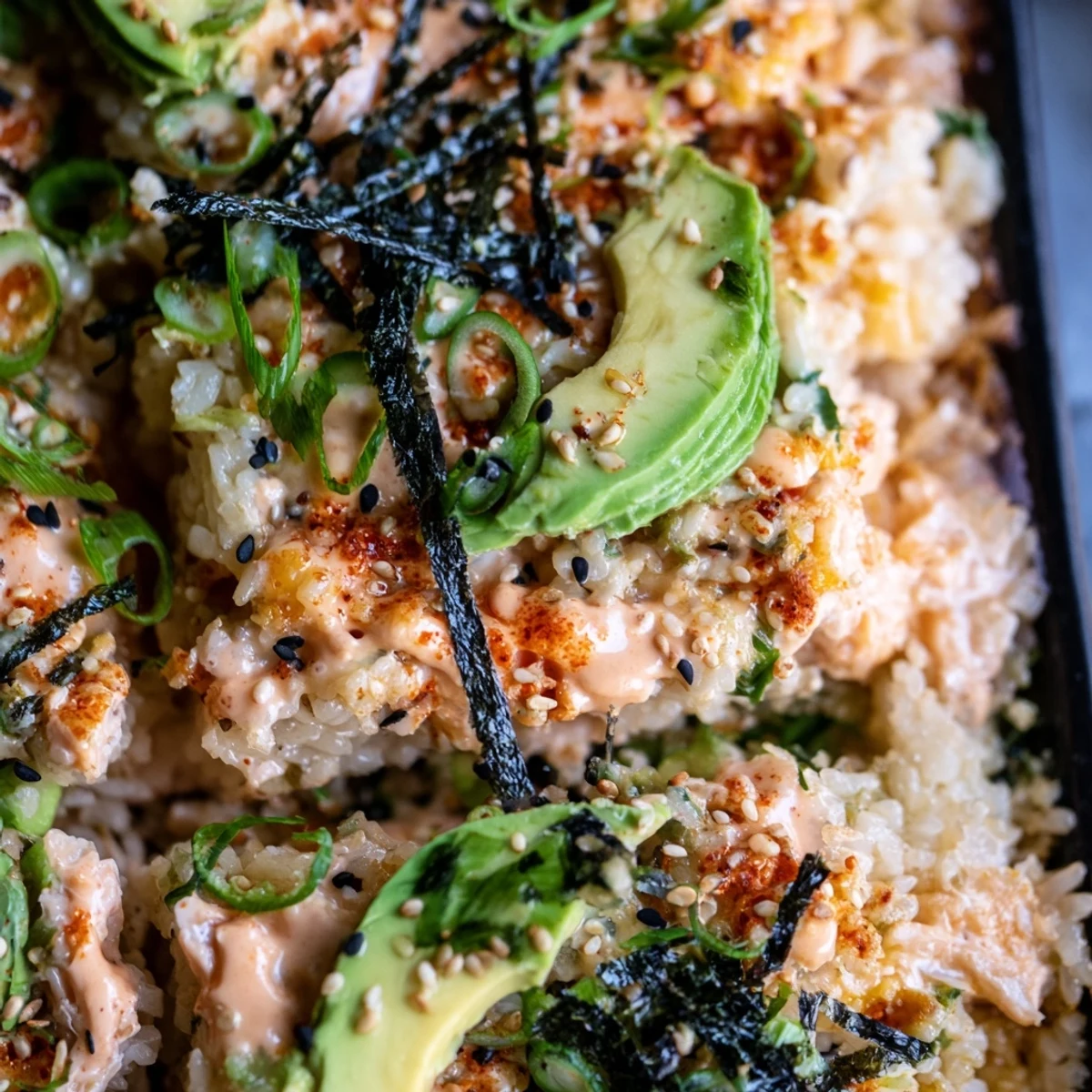
- Scatter nori strips, green onions, avocado slices, and sesame seeds over the warm bake. Serve immediately while everything is still slightly warm, offering extra Sriracha or unagi sauce for drizzling.
 Save to Pinterest
 This dish has saved me more times than I can count when unexpected guests arrive. Watching skeptical friends become converts after that first bite never gets old.
Making It Your Own
The beauty of this recipe lies in its adaptability—swap salmon for crab, imitation crab, or even canned salmon for a budget-friendly version. During summer, I add thinly sliced cucumber for refreshing crunch, and in fall, a handful of toasted pumpkin seeds brings wonderful nuttiness.
Perfect Pairings
Keep sides light since this bake is already quite satisfying. Miso soup with cubes of soft tofu creates a traditional Japanese meal feel, while a simple cucumber salad dressed with rice vinegar cuts through the richness beautifully. For drinks, cold Japanese beer or a crisp dry sake complements the flavors without overwhelming them.
Serving Strategy
Set up a toppings bar and let guests customize their portions—extra avocado, more spicy mayo, or additional nori strips can be offered alongside. This interactive approach makes dinner feel special while accommodating different preferences.
- Warn guests about the hidden heat from the Sriracha before they dive in
- Have small serving bowls ready so everyone gets some crispy edges
- Keep extra pickled ginger nearby to refresh palates between bites
 Save to Pinterest
 Theres something deeply satisfying about deconstructing a complex dish and making it accessible—this bake captures the soul of sushi in a form that brings people together around the table.
Questions & Answers
- → Can I make this ahead of time?
-
Prepare the rice and salmon mixture up to a day in advance. Store separately in the refrigerator. Assemble and bake when ready to serve, adding fresh toppings just before serving.
- → What can I substitute for Sriracha?
-
Try sambal oelek, gochujang paste, or any chili garlic sauce. For a milder version, use sweet chili sauce or simply reduce the amount of spicy element.
- → Is sushi rice necessary?
-
Short-grain white rice works best due to its sticky texture. Arborio or calrose rice are acceptable alternatives. Long-grain varieties won't hold together properly.
- → Can I use leftover cooked salmon?
-
Absolutely. Flake about 2 cups of leftover cooked salmon and skip the initial baking step. Mix directly into the creamy sauce and proceed with layering.
- → How do I store leftovers?
-
Keep in an airtight container in the refrigerator for up to 3 days. Reheat gently in the oven at 160°C (325°F) until warmed through. The rice may dry out slightly, so add a splash of water before reheating.
- → Can I make this spicy mayo lighter?
-
Use Greek yogurt mixed with a small amount of light mayo, or substitute with light mayonnaise. The texture will be slightly different but still delicious.